
Loading...
This record has been deleted. Since it is linked to a published record, it is available here for reference purposes only.
Click here to view the deleted recordThis document has been updated. This is not the latest published version. Click here to view the latest version of the record.
Virtual Library Resource
(VLR)
last updated: 22 Dec 2016
The Interface between access and benefIt-sharIng rules and BioTrade
EN
- UN and other specialized agency of the UN Common System
2016-01
EN
- UNCTAD web site [ English ]
- VietNam-ABS-BioTrade-v9-web.pdf [ English ]
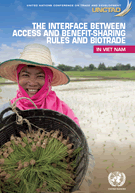
In 1994, Viet Nam became a member of the Convention on Biodiversity (CBD). By being a Party to the CBD, Viet Nam had pledged to mainstream biodiversity considerations and sustainable use of biological resources in its policy-making agendas. Recognizing that biodiversity conservation and sustainable development cannot be successful without the participation of the poor, the Biodiversity Law of 2008 was envisaged as a legal instrument which could integrate pro-poor principles and involve biodiversity holders at the grass roots level. Coupled with the Decree No. 65/2010/ND-CP, which details implementation procedures for the BL 2008, the Government attempted to put in place legislative and administrative measures which, from the findings of this report, are still unclear with respect to certain definitions and legal aspects-related access and benefit-sharing (ABS) and the demarcation of ministerial assignments relating to the State management of genetic resources.
On the back of these policy and administrative integration challenges, UNCTAD BioTrade, in collaboration with the Biodiversity Conservation Agency of Vietnam, Helvetas - Viet Nam and the recently created BioTrade Implementation Group and with the support of SECO Switzerland, has demonstrated a slow but steady rise as a bolster for sustainable development through trade and investment in biological resources in keeping with the objectives of the CBD and the Protocol. Although in legal terms, ABS and BioTrade are subtly different, these two concepts converge in a manner that BioTrade fortifies implementation of the ABS Regulations, and the Regulations become the enabler and promoter of BioTrade as a viable livelihood option for various actors in the value chain, especially the local and indigenous communities.
EN
- Viet Nam
- Aichi-T1. Awareness of biodiversity values
- Aichi-T3. Incentives
- Aichi-T4. Use of natural resources
- Aichi-T5. Loss of habitats
- Aichi-T7. Areas under sustainable management
- Aichi-T16. Nagoya Protocol on ABS
- Aichi-T18. Traditional knowledge
- GBF-T16. Sustainable consumption choices are enabled, and food waste reduced by half
- GBF-T18. Reduce harmful incentives by at least $500 billion per year
- GBF-T15. Businesses assess and disclose biodiversity dependencies, impacts and risks, and reduce negative impacts
- GBF-T01. All areas are planned or managed to bring loss of areas of high biodiversity importance close to zero
- GBF-T10. Areas under agriculture, aquaculture, fisheries and forestry are managed sustainably
- GBF-T13. Fair and equitable sharing of benefits from genetic resources, digital sequence information and associated traditional knowledge
- GBF-T22. Ensure participation, justice, and rights for indigenous peoples and local communities, women, youth persons with disabilities and environmental defenders
Migrated information
Format: Text document (e.g. adobe acrobat reader or Word)
Format details: PDF format
Civil society organizations
Government officials
National/Federal
Sub-national
Indigenous peoples and local communities
Inter-governmental organizations
Private Sector
Research/Academia
Ex-situ collections
Expertise Level: Advanced
EN
Format: Text document (e.g. adobe acrobat reader or Word)
Format details: PDF format
Target Groups
Civil society organizations
Government officials
National/Federal
Sub-national
Indigenous peoples and local communities
Inter-governmental organizations
Private Sector
Research/Academia
Ex-situ collections
Expertise Level: Advanced


