
Loading...
This record has been deleted. Since it is linked to a published record, it is available here for reference purposes only.
Click here to view the deleted recordThis document has been updated. This is not the latest published version. Click here to view the latest version of the record.
Virtual Library Resource
(VLR)
last updated: 30 Oct 2018
Blue BioTrade: Harnessing Marine Trade to Support Ecological Sustainability and Economic Equity
EN
2018-01
EN
original document
EN
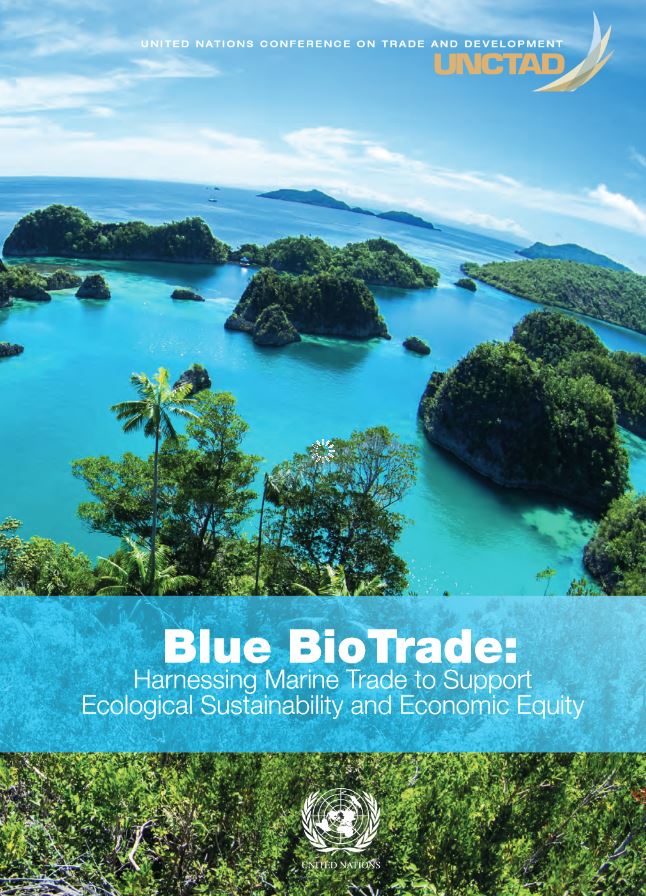
BlueBioTrade is the "blue" equivalent of BioTrade with a focus on the interconnected values and benefits of ecologically healthy, well-managed marine and coastal habitats. This emerging field can catalyze the sustainable and equitable use and protection of marine and coastal biodiversity and oceans as a whole. This report specifically addresses how the Blue BioTrade concept can promote sustainable and equitable economic sectors and value chains that rely on marine and coastal resources
EN
- Global
- Aichi-T1. Awareness of biodiversity values
- Aichi-T4. Use of natural resources
- Aichi-T5. Loss of habitats
- Aichi-T6. Sustainable fisheries
- Aichi-T8. Pollution
- Aichi-T10. Vulnerable ecosystems
- Aichi-T16. Nagoya Protocol on ABS
- Aichi-T19. Biodiversity knowledge
- GBF-T16. Sustainable consumption choices are enabled, and food waste reduced by half
- GBF-T15. Businesses assess and disclose biodiversity dependencies, impacts and risks, and reduce negative impacts
- GBF-T01. All areas are planned or managed to bring loss of areas of high biodiversity importance close to zero
- GBF-T05. Use, harvesting and trade of wild species is sustainable, safe and legal
- GBF-T07. Pollution reduced, halving nutrient loss and pesticide risk
- GBF-T08. Minimize impacts of climate change and ocean acidification including through nature-based solutions and/or ecosystem-based approaches
- GBF-T13. Fair and equitable sharing of benefits from genetic resources, digital sequence information and associated traditional knowledge
- GBF-T20. Capacity-building and development, technology transfer, and technical and scientific cooperation for implementation is strengthened
Migrated information
Format: Text document (e.g. adobe acrobat reader or Word)
Civil society organizations
General public
Government officials
Indigenous peoples and local communities
Private Sector
Research/Academia
Expertise Level: Beginner
EN
Format: Text document (e.g. adobe acrobat reader or Word)
Target Groups
Civil society organizations
General public
Government officials
Indigenous peoples and local communities
Private Sector
Research/Academia
Expertise Level: Beginner


